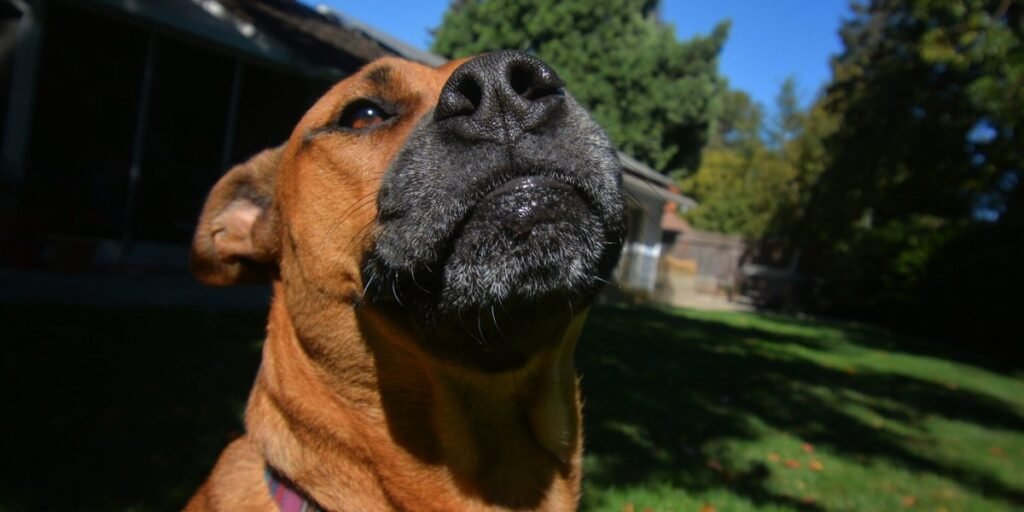


Your dog hides at the doorbell. Freezes when a stranger approaches. Tucks their tail in unfamiliar places. Refuses food when guests are over. People keep telling you they’re “just shy” — but you know it’s more than that. And you wonder, quietly, if they’ll ever be the dog you imagined when you brought them home.
They get labeled ‘shy’ (dismissive), ‘shut down’ (clinical but vague), or ‘just need more socialization’ (often the WORST advice). What they actually need is patient, science-backed confidence-building work that respects their nervous system instead of overwhelming it.
This guide walks you through the science of fear-based behavior, identifying YOUR dog’s specific triggers and thresholds, and the daily protocols that genuinely build confidence — choice work, pattern games, decompression, and brave moment tracking.
Don’t force socialization (it makes fear worse). Map their specific triggers and threshold distances. Offer real choice in low-stakes moments. Use the pattern game (1-2-3 + treat) for environmental anxiety. Reward voluntary brave choices. Track recovery time (not events). Most fearful dogs become CONFIDENT — not fearless — in 3-6 months of consistent work.
Why fearful dogs exist (and why it’s not your fault)
Fearful temperaments come from a combination of genetics, early socialization windows (3-14 weeks of age), and individual experiences. Some dogs are born more sensitive. Some have early trauma. Most have both.
None of this is your fault. AND none of it means your dog can’t change. Fearful nervous systems CAN be retrained — slowly, gently, with the right approach.
What NOT to do (most common mistakes)
1. Force interactions
Dragging your dog to the dog park, “exposing” them to strangers, letting kids approach them — this is flooding. It often deepens fear rather than reducing it.
2. Use punishment
Punishing fearful behavior trains your dog to suppress the WARNING signals (growling, freezing) while leaving the underlying fear intact. Worse: it can escalate to bites.
3. Constant reassurance
Soft soothing voices (“It’s okay, it’s okay”) during fearful moments often signal to dogs that something IS wrong. Calm, neutral presence is more powerful than reassurance.
4. Comparison to other dogs
“Why can’t you be more like…” Stop. Your dog is wired for caution. That can become confidence — but not by being someone else.

The choice protocol — the most important tool
Fearful dogs often live in worlds where everything happens TO them. Strangers approach. Hands reach over. Leashes pull them places they’re afraid of. The single most powerful confidence-building shift is offering REAL choice in low-stakes moments.
- Approach or stay — let them choose
- Take the treat or not — let them choose
- Come closer or step back — let them choose
- Engage with the new object or not — let them choose
Honor each choice. Reward each one that leans toward courage. Over weeks, choices stack into confidence.
A structured 30-day confidence path
The 30-Day Dog Emotional Wellness Journal includes daily prompts, brave moment logs, and the gentle structure that compounds small courage into real change.
The 5 confidence-building practices that work
1. The Choice Protocol
Daily real choices in low-stakes contexts. Builds agency.
2. The Pattern Game (1-2-3)
On walks: “one” (step), “two” (step), “three” (treat). The predictable rhythm calms unpredictable environments.
3. The Sniff Walk
Weekly decompression. Long line. Quiet area. No demands. Lowers baseline cortisol significantly.
4. The Stranger-Distance Practice
From beyond threshold, expose your dog to passing strangers + reward calm moments. Build closer slowly.
5. The Brave Moment Log
Daily record of ONE brave thing your dog did. After 30 days = 30 pieces of evidence that change is happening.
When to involve professionals
If 4-6 weeks of consistent work shows no progress, find a positive-reinforcement trainer specialized in fearful dogs. Look for CDBC, KPA-CTP, IAABC, or PPG certifications. Avoid anyone using punishment or “balanced” methods with fearful dogs.
Severe fearful dogs may benefit from short-term medication (SSRIs, situational anxiolytics). This is not failure — it’s responsible care.
The emotional side of fearful dog parenting
It’s exhausting. The crosswalks. The unhelpful advice. The grief for the dog you imagined. If you’re carrying this, see our 30 dog parent affirmations for the inner work. The reactive dog protocols in our pillar guide also overlap with fearful dog work — many techniques transfer.
FAQ
Will my fearful dog ever be “normal”?
Fearful dogs typically become CONFIDENT — not fearless. They can navigate the world without crumbling. That’s the realistic, achievable goal — and it’s deeply meaningful.
Should I socialize my fearful dog more?
Carefully. Forced socialization usually deepens fear. Slow, controlled exposure below threshold + positive associations works. Random exposure does not.
Is medication right for fearful dogs?
For moderate-to-severe cases, often yes. Behavior work + medication combined has the strongest evidence. Talk to a veterinary behaviorist.
My dog was fine as a puppy — why fearful now?
Genetic predispositions sometimes emerge between 6-18 months as the dog matures. Past trauma (boarding, surgery, scary event) can also trigger fear that wasn’t visible before. Both respond to the protocols here.
What about rescue dogs with unknown histories?
Many rescue dogs are fearful. Our first 30 days with a rescue dog guide pairs perfectly with this one — the foundations matter.
Build confidence over 30 days
30 days of daily prompts, brave moment tracking, and the structure that turns small courage into real growth.